VNISH GLOBAL · Academy
How an ASIC Mining Stack Works: Hash, Share, Pool and Firmware
An ASIC receives work from a pool, builds candidate header data and repeatedly evaluates SHA-256. A result below the pool target is a share; only the much rarer result below the network target can become a block. Firmware coordinates the local device, while the pool, Bitcoin consensus and the electrical installation remain separate systems.
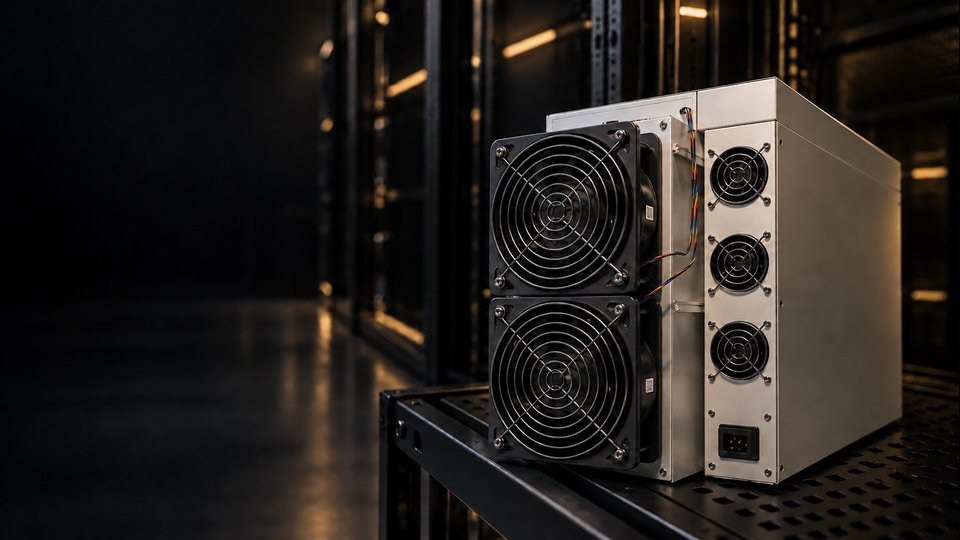
From exact hardware to accepted work
- Identify exact hardware
- Resolve this site route
- Verify file evidence
- Prepare recovery
- Install one canary
- Read back accepted work
Working method
- Separate the layers: Bitcoin consensus defines valid blocks; the pool packages work and accounts for shares; the miner performs hashing; firmware schedules chips, cooling and telemetry.
- Read local hashrate, pool-side hashrate and accepted shares as different observations with different windows. A single dashboard value cannot replace all three.
- Use wall power and a matching hashrate window for efficiency. Record source, unit, timestamp, profile and ambient conditions so another operator can reproduce the calculation.
- Treat a share as evidence of work against the pool target, not automatically as a found block or a payout amount. Pool payout rules are a separate contract.
Limits and stop conditions
- Firmware cannot remove PSU, wiring, cooling or silicon limits.
- A local UI value does not prove pool acceptance; a pool value does not identify the local cause of a fault.
- Never transfer limits or settings between Air, Hydro and Immersion variants without an exact route record.
Reusable artifact
| # | Field | Checked | Evidence / note |
|---|---|---|---|
| 1 | Job source and observation window | □ | |
| 2 | Local hashrate and its source | □ | |
| 3 | Pool-side hashrate and accepted/rejected/stale categories | □ | |
| 4 | Wall power, meter and timestamp | □ | |
| 5 | Exact model, board, build and profile | □ |
Copy this structure into a change record; never place passwords, keys or private access details in it.
Primary sources
- Bitcoin Developer Guide — Mining Reviewed 2026-09-10
- Stratum V2 — Mining Protocol Reviewed 2026-09-10